


2 Years in

Progress, learnings and future direction

Building safe and inclusive DPI for societies

Overview

Digital public infrastructure (DPI) is driving innovation to strengthen and expand the digital economy.

When done right, by designing with appropriate safeguards and inclusion, DPI is a means to many ends. It can bring about numerous benefits and significant multiplier effects, such as catalysing economic growth, boosting health and well-being outcomes, expanding access to education, and improving livelihoods. The opportunity for population-scale change, and for driving progress on the Human Development Index, has never been greater.

In 2023, DPI was selected by the United Nations Secretary-General as one of 12 High Impact Initiatives withthe potential to accelerate the Sustainable Development Goals.

Today, DPI is moving from global recognition to widespread adoption.

In 2024, 193 UN Member States agreed, with the adoption of the Global Digital Compact (GDC), on the need for safeguards to ensure that DPI approaches are inclusive, responsible, safe, secure and user-centred. The launch of the Universal DPI Safeguards Framework in 2024 was the direct response to that call. The Framework, designed through a multi-stakeholder process led by the DPI Safeguards Initiative, comprises a set of 350+ practices that provide governments and institutions a foundation for building and operating responsible DPI.

More than 150 countries have implemented some kind of DPI system, from national ID to payment data exchange systems, bringing both significant opportunities and risks for billions of people across the world.

Digital public infrastructure can accelerate progress towards the Sustainable Development Goals, but only if it is designed to protect the people it serves. The Digital Public Infrastructure Safeguards Initiative helps countries build systems that are safe, inclusive, and trusted – and I urge Member States to make that the standard everywhere.

António Guterres
Secretary-General of the United Nations

As UN Member States deploy DPI to improve public service delivery, reach underserved populations, and create new markets, proactive inclusion and risk mitigation measures are a necessary condition for success. The DPI Safeguards Initiative is the key digital cooperation mechanism to ensure this opportunity is realized responsibly and equitably for all.

Amandeep Singh-Gill
United Nations Under-Secretary-General, Special Envoy for Digital and Emerging Technologies

As UN Member States deploy DPI to improve public service delivery, reach underserved populations, and create new markets, proactive inclusion and risk mitigation measures are a necessary condition for success. The DPI Safeguards Initiative is the key digital cooperation mechanism to ensure this opportunity is realized responsibly and equitably for all.

Amandeep Singh-Gill
United Nations Under-Secretary-General, Special Envoy for Digital and Emerging Technologies

Digital Public Infrastructure - shared systems like secure IDs and payment platforms - can supercharge progress. But it must be built to be safe, fair, and open to all. Get it right, and it becomes a powerful force for good.

Alexander de Croo
Administrator, United Nations Development Programme

The DPI Safeguards Initiative has surfaced critical lessons from countries on their digital transformation journey: safeguards are not a hurdle to innovation, but a foundational enabler for its success. The DPI ecosystem must now work together to ensure that privacy, inclusion and people’s rights are at the centre of DPI implementation.

Robert Opp
Chief Digital Officer, UNDP

With Safeguards vS Without Safeguards

With Safeguards

DPI becomes more than infrastructure: itcan be a catalyst for innovation, economicgrowth and social inclusion.

For countries seeking to accelerate developmentand looking to leapfrog on the markers that matter– health, longevity, education and livelihoods –safe and inclusive DPI is the foundation forinnovating and delivering population-scale services.

Without Safeguards

DPI creates exclusion, reinforcesdiscrimination and undermines trust.

This leaves vulnerable groups without adequateaccess to social, health, banking or public services.Safeguards should not be retrofitted into DPI; theyshould be an upfront necessity to prevent harm,exclusion and discrimination.

SAFEGUARDS AT THE CENTRE OFTHE HUMAN DEVELOPMENT AGENDA

Emerging learnings

Phase 1 of the DPI Safeguards Initiative set out to mainstream the adoption of the Universal DPI Safeguards Framework, gather learnings across the evolving DPI ecosystem, and surface actionable insights to guide implementations.Two years in, countries are beginning to view safeguards not as a compliance burden or add-on, but as a non-negotiable upfront necessity for achieving population-scale digital transformation for everyone, everywhere.

Phase 1: 2023-2025
What we did
Positioned safe and inclusive safeguards centrally in the global DPI discourse, laying the foundation forrights-based design and implementation of DPI as a gold standard.
Integrated safeguards into policy instruments, including the GDC, formalizing requirements, standards and generating accountability for meeting GDC commitments.
Strengthened the work of safeguards practitioners by influencing their approaches, enhancing their capacity, and guiding the consistent application of safeguards principles across diverse contexts.
Established a common vocabulary andnorms for safeguards, enabling governments, international organizations and civil societies to communicate with a shared language.
Organized a range of structured capacity-building engagements on safeguards, including training, workshops and knowledge-sharing sessions.
Phase 2: 2026-2028
Where we are heading
Moving from political alignment to implementation

Greater political and multilateral alignment will help build legitimacy, momentum and shared direction around safeguards. To make progress: continue to build commitments, and develop country-level implementation pathways with agreed processes and practical, time-bound actions.
Assigning ownership to drive delivery

Once a country pathway is in place, advancing safeguards requires a lead institution, named actors responsible for different parts of the work, and a multi-stakeholder mechanism for coordination, decision-making and delivery.
Integrating safeguards into funding decisions

Safeguards need to be reflected in budget processes and financing decisions. Progress will depend on integrating safeguards into country programming, public budgeting, and donor and financing mechanisms, shaping both resource allocation and implementation behaviour.
Broadening the ecosystem and support for safeguards implementation

Countries need context-specific support, practical tools, and to be accompanied through implementation. Further progress will depend on a broader set of actors providing this support, so that safeguard simplementation can be advanced through multiple channels rather than a narrow set of actors.

Progress in numbers

7
8
9
9

Countries across 5 regions

pioneered the adoption of the Universal DPI Safeguards Framework and its Principles.

0
1
1
0
4
5
6

Additional countries

have requested support with safeguards implementation, signaling that trust is critical to unlock value of DPI in countries.

1
2
2
1
0
0

International organizations

contributed to the expansion of the DPI Safeguards ecosystem and generated a common language around safeguards implementation.

4
5
6
6
5
6
7
7

Working group members

selected across two cohorts co-created a set of #SafeDPI public knowledge assets for the DPI ecosystem.

1
2
3
2

,

0
0
0
0
0
2
0
0
0
0
0
0
0
0
0
0
0
0
+

Stakeholders actively engaged

in shaping what responsible DPI looks like in practice through convenings.

0
1

,

0
0
0
0
0
2
0
0
0
0
0
0
0
0
0
0
0
0
+

Organizations

represented a plurality of voices and perspectives, shaping the DPI Safeguards Initiative from the ground up.

1
2
0
0

,

0
0
0
0
0
2
0
0
0
0
0
0
0
0
0
0
0
0
+

Users

across diverse geographies have accessed the Universal DPI Safeguards Framework, using it as a foundational and guiding resource for building safe and inclusive DPI.

Safeguards Champions

It is not DPI if it is not safe and inclusive

With the launch of the MyMzansi roadmap, South Africa is building integrated digital public infrastructure that connects digital identity, data exchange, payments and services into a single system for accessing government services. We have committed to the Universal DPI Safeguards and are embedding these into the design from the outset, alongside open standards and digital public goods principles. In parallel, we are beginning to formalize more structured engagement with civil society following initial consultations.

— Melvyn Lubega, Head of the Digital Services Unit, South Africa Presidency

As countries around the world lay the foundational digital rails that will transform their economies and societies for years to come, they face crucial decisions that will shape the well-being of all people. The UN DPI Safeguards Initiative, alongside several partners, is working with countries to chart a course to a safe, inclusive digital future. Together, we'll help make the safe choice the easy choice for every country embarking on a journey toward a digital future.

— CV Madhukar, CEO, Co-Develop

The DPI Safeguards Initiative ensures that digital public infrastructure is developed in ways that protect openness, trust, and user rights. As DPI systems scale globally, success will depend not only on sound public governance, but also on the meaningful participation of private sector actors that operate critical digital infrastructure.

— Ashley Olson Onyango, Head of Financial Inclusion and AgriTech, GSMA

As Uganda accelerates the rollout of digital public infrastructure, our key concern has been that digital systems are advancing faster than safeguards, public understanding, and meaningful participation. Through our engagement in the DPI Safeguards Initiative, we have recognized the critical importance of strengthening the capacity of civil society actors and facilitating multi-stakeholder dialogue on digital rights and safeguards. This has enhanced more confident engagement with duty bearers on implementation gaps and is contributing to the emergence of a stronger, more coordinated civil society movement advocating for inclusive, accountable, and rights-centred digital transformation.

— Jackson Leviticus Wandera, Program Officer, Economic Justice & Social Protection, Initiative for Social and Economic Rights (ISER)

We want digital public infrastructure to address and reduce existing inequalities, particularly for women and disadvantaged groups. For this reason, GovStack’s ‘Women in GovTech Challenge’ promotes a human-centered, inclusive approach to building digital public infrastructure. Consequently, the DPI Safeguards Initiative is our natural partner and has helped our participants to develop their solutions in line with responsible standards from the outset – not merely as a matter of fairness, but as a prerequisite for building systems that truly serve everyone.

— Katharina Mänz, Deputy Head ofDepartment, Federal Ministry forEconomic Cooperation andDevelopment (BMZ)

By leveraging digital public infrastructure, Brazil is strengthening a set of crucial government policies such as the digital ID, the Unified Registry for social programmes, and the innovative Rural Environmental Registry, therefore promoting citizenship, eradicating poverty and enabling a sustainable future. We are committed to building such infrastructure safely and inclusively, benefiting from the active engagement of our vibrant civil society.

— Esther Dweck, Minister of Management and Innovation in Public Services of Brazil

Digital public infrastructure will only deliver on its promise if people trust it. That’s why the DPI Safeguards Initiative is so critical - it embeds safety, inclusion, and accountability from the start. When safeguards are foundational, nation‑led DPI can scale responsibly, reach the most underserved, and become a powerful driver of equitable growth and sustainable development.

— Sanjay Jain, Director DPI, Gates Foundation

Digital public infrastructure is rapidly reshaping the way people access and use financial services. Through the Global DPI Insights Community, the Center for Financial Inclusion at Accion is exploring risks to user experience and trust, as these systems roll out across the world. This work is taking place alongside technical partners GSMA, CCAF, the UN Safeguards Initiative and Integral Governance Solutions, and with support from the Mastercard Center for Inclusive Growth. The UN’s Universal DPI Safeguards Initiative is playing a vital role by turning lessons into practical guidance for those building DPI. Together, we are helping policymakers and leaders create DPI systems that are secure, affordable, and able to reach underserved people at scale.

— Michael Schlein, President & CEO, Accion

Countries are at different stages of their DPI journeys, but the need for safeguards is universal. DPI must be safe and inclusive to earn user trust and achieve widespread adoption. By promoting the use of the DPG Standard as part of the Universal DPI Safeguards Framework and through our collaboration on the Safeguards Accelerator program, we provide countries and organizations practical pathways from commitment to action.

— Liv Marte Nordhaug, Secretariat CEO, Digital Public Goods Alliance

The Universal DPI Safeguards Framework provides us with a structured, rights-based language and methodology to strengthen our advocacy for a hybrid system — one that includes non-digital pathways as a right. This aligns with digital public infrastructure principles to promote trust, accountability, and human rights in digital transformation. As the South African government moves swiftly toward the digitisation of other permanent grants and social services, the Universal DPI Safeguards Framework is becoming increasingly significant to our work.

— Evashnee Naidu, KZN Regional Manager &Hoodah Abrahams-Fayker, National AdvocacyManager, Black Sash

Safeguards in Action

Implementing safeguards in practice
Implementing offline digital ID to strengthen inclusion
MALAWI
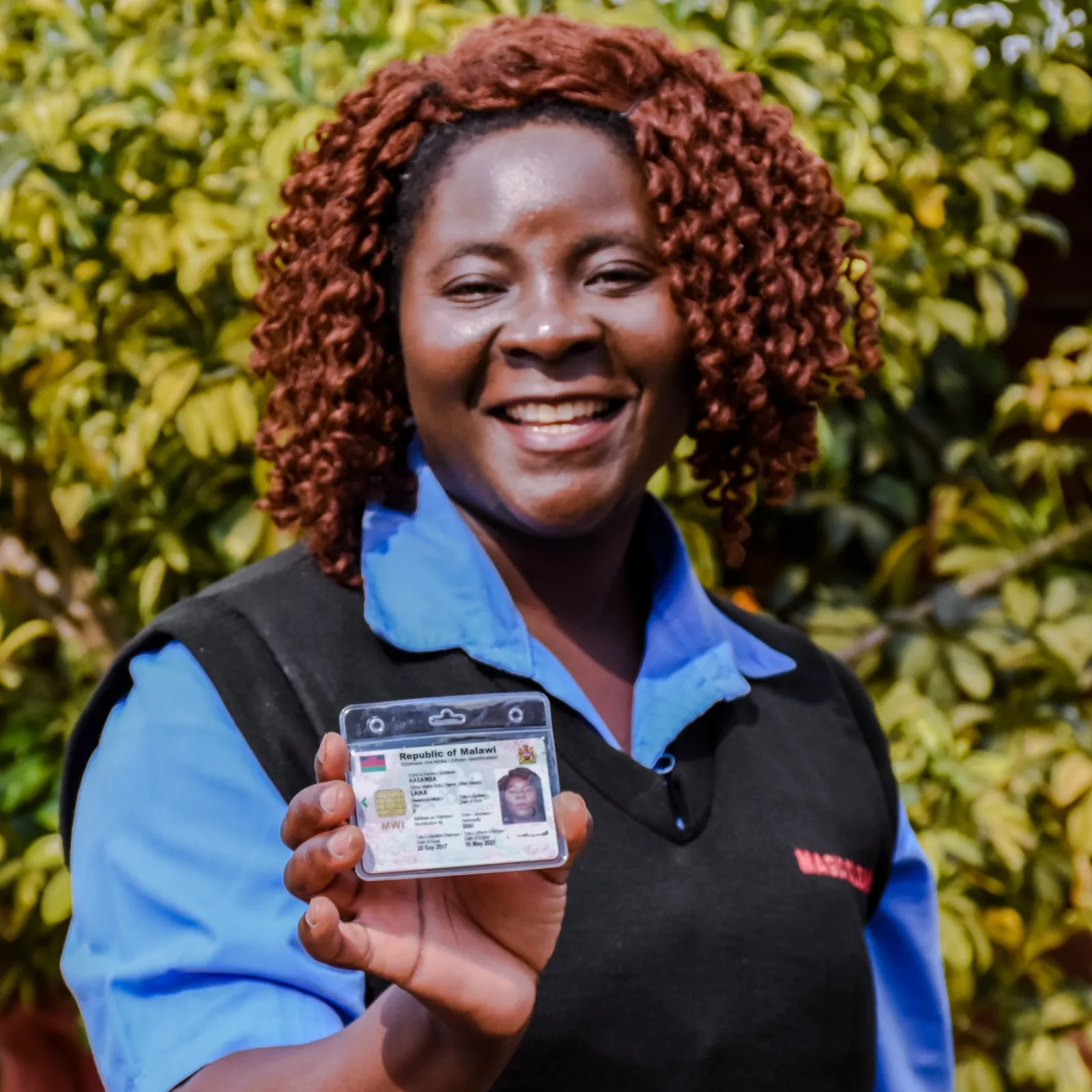
Malawi is a pioneer in inclusive digital infrastructure and undertook a massive national digital ID campaign, registering 97 percent of its population. However, one in ten people were still unable to access services, blocked by missing smart cards, patchy electricity, and overstretched district offices. In parallel, weak verification created risks of impersonation, including cases where individuals used someone else’s ID card to collect agricultural subsidies – the Farmers Input Subsidy Programme (FISP) – such as fertilizer and seeds. UNDP Malawi worked with the National Registration Bureau under the Ministry of Homeland Security for an offline digital ID approach as a practical safeguards measure to strengthen both inclusion and integrity in service delivery.
This included Malawi rolling out offline digital ID in the form of biometric QR verification that can provide ID confirmation without connectivity, devices or infrastructure. In 2025-26, approximately 1.1 million people were verified and accessed the FISP by using the digitally signed biometric QR code. Almost 2 million people used the digital QR code to register and vote in the 2025 election. A similar model could be adapted for other public interest use cases, including social cash transfers, public works programmes, healthcare delivery, and SIM registration.
Lesotho’s DPI drive
Building better for every child
LESOTHO
As Lesotho digitalizes its social protection systems, the risks also increase: personal data from families in remote areas is now stored on national platforms. The government is responding by developing DPI safeguards, starting with systems that directly impact children. With support from UNICEF and the Co-Develop Fund, key protections are being integrated into the national social registry, National Information System for Social Assistance (NISSA), which covers over 90 percent of households. This will help prevent exclusion and protect personal data from misuse. For families in remote communities, this means accessing essential services in a way that they can trust.

UNICEF is one of our key partners, especially when it comes to DPI. Even though we are now taking it further by conducting pilots, we are also working closely with UNICEF on DPI safeguards. We will therefore collaborate with them to establish our own local DPI safeguards framework.

— Kanono Ramashande, Principal Secretary, Ministry of Communication, Lesotho

Digital transformation must be inclusive from the start. These safeguards ensure that no child is left behind and that families can access services with confidence and dignity.

— Deepak Bhaskaran, UNICEF Representative in Lesotho

Accelerating DPI with safeguards

The DPI Safeguards Initiative has shifted the narrative of safeguards from a compliance checklist to being the heartbeat of DPI. Ensuring that digital transformation empowers rather than excludes, safeguards are a proactive driver for delivering equitable prosperity.

Foundation for inclusion: Safeguards break down barriers like language, literacy and socio-economic status to ensure marginalized groups—such as rural farmers and women—are fully included.

Gateway to adoption: Trust is the gateway to uptake. By addressing data privacy and user needs, safeguards turn skeptics into active users, boosting engagement across rural and urban divides.

Operational efficiency: Seamless interoperability and transparent processes streamline operations, reducing costs and administrative friction for governments, providers and people.

Fuel for innovation: Inclusive design and multi-stakeholder collaboration transform DPI into a living ecosystem that adapts to local contexts and global challenges.

Long-term viability: Embedded from the start, safeguards ensure DPI’s long-term viability, preventing exclusion and building resilient, scalable systems for the future.

The 5C’s of building with safeguards

The DPI Safeguards Initiative has shifted the narrative of safeguards from a compliance checklist to being the heartbeat of DPI. Ensuring that digital transformation empowers rather than excludes, safeguards are a proactive driver for delivering equitable prosperity.

Two years of implementing safeguards have shown that moving from political alignment to practical delivery requires:

Commitment
Political leadership is essential. Governments need clear authority at the centre of decision-making andstrong coordination across ministries to treat DPI as foundational national infrastructure.
Capacity
Countries must invest in domestic technical expertise to build, adapt and maintain digital systems locally ratherthan relying indefinitely on external vendors.
Capital
Financing must move beyond short-term projects towards sustained investment across the full lifecycle of DPIsystems. Safeguards must be integrated into budget processes and financing decisions.
Community
Trust and sovereignty are essential. People must have confidence that their data is protected, and robustsafeguards should be established before scaling high-stakes systems.
Collaboration
DPI works best when governments, the private sector and civil society design systems together, adoptingshared standards that enable secure cross-border integration.

Partner With us

The DPI Safeguards Initiative is a project funded by the Digital Cooperation Fund. The Initiative is grateful for the generous support during Phase I from Co-Develop, the European Union and the Gates Foundation. Initial investments have moved the Initiative from pioneering work to global momentum, but more resources are needed to match the growing demand from countries and the scale of the opportunity at hand.

To truly drive the global mainstreaming that translates political commitment into implementation, we need expanded funding for the Secretariat and the wider ecosystem. Partner Interest Form.

Beyond funding, there are various ways of partnering with us to scale safeguards at a country, regional or global level:

Drive adoption: Utilize the Resources Hub to implement safeguards in a specific country.
Convene dialogue: Partner with us to host a multi-stakeholder dialogue in your country or region.
Institutionalize: Work with us to internalize safeguards within your organization’s policies or products.